If you have Patio Magic! concentrate, the standard mixing ratio is 1 part concentrate to 4 parts water. So for a 2.5L bottle, you'd mix 500ml of concentrate with 2 litres of water. If you're dealing with heavier green or black algae staining, some product versions allow a stronger mix of 1 part concentrate to 9 parts water, yes, that's actually more dilute, not stronger, because Patio Magic! works as a biocide treatment that keeps killing growth over time, not a scrub-off cleaner. The key thing to know before you start is exactly which form of Patio Magic! you have, because one version doesn't need mixing at all.
How to Mix Patio Magic: DIY Ratios, Prep, and Fixes

Talia Lang
12 Jun 2026
First: figure out which Patio Magic! product you're holding
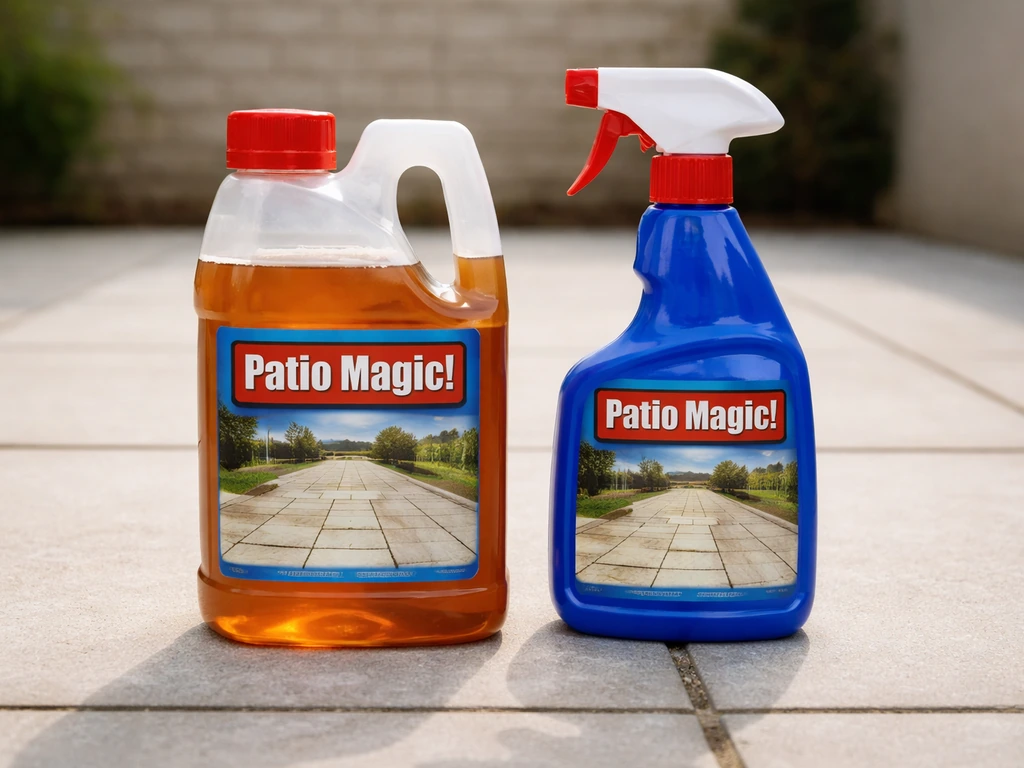
Patio Magic! comes in at least two distinct formats and people often don't realise they've bought different things. The ready-to-use spray version comes pre-diluted in a trigger bottle, you just spray it on and leave it. No mixing, no bucket, nothing to do except apply it. The concentrate version is a liquid you dilute yourself, usually sold in 2.5L or larger bottles. If your bottle says 'Concentrate' on the label, that's the one you mix. If it came in a trigger spray bottle or a pre-filled sprayer, it's already ready to use. Check before you do anything else, because over-concentrating the product or diluting something that's already diluted both lead to poor results.
Tools and materials you'll need
- Patio Magic! concentrate (check the label — 2.5L is the most common DIY size)
- Clean plastic bucket, at least 10–15 litres capacity
- Measuring jug or graduated container for accurate ratios
- Clean tap water (cold is fine)
- Garden pump sprayer or watering can with a fine rose — a pump sprayer gives the most even coverage
- Stiff broom or brush for surface prep
- Garden hose or pressure washer for pre-cleaning
- Rubber gloves and safety glasses
- Old clothes or a work apron
You don't need a drill mixer or anything fancy for Patio Magic! concentrate. It's a liquid biocide, not a thick mortar or sealer, so it blends easily with a stir. A simple plastic bucket and a measuring jug are the main things. If you're comparing this to something like mixing mortar for patio repairs or cement-based products, those do need more precise consistency work, Patio Magic! If you are mixing mortar, focus on getting the right consistency and proportions rather than using the biocide dilution ratios described for Patio Magic mixing mortar for patio repairs. is far more straightforward on the mixing side.
How to mix it: ratios, water, and what it should look like
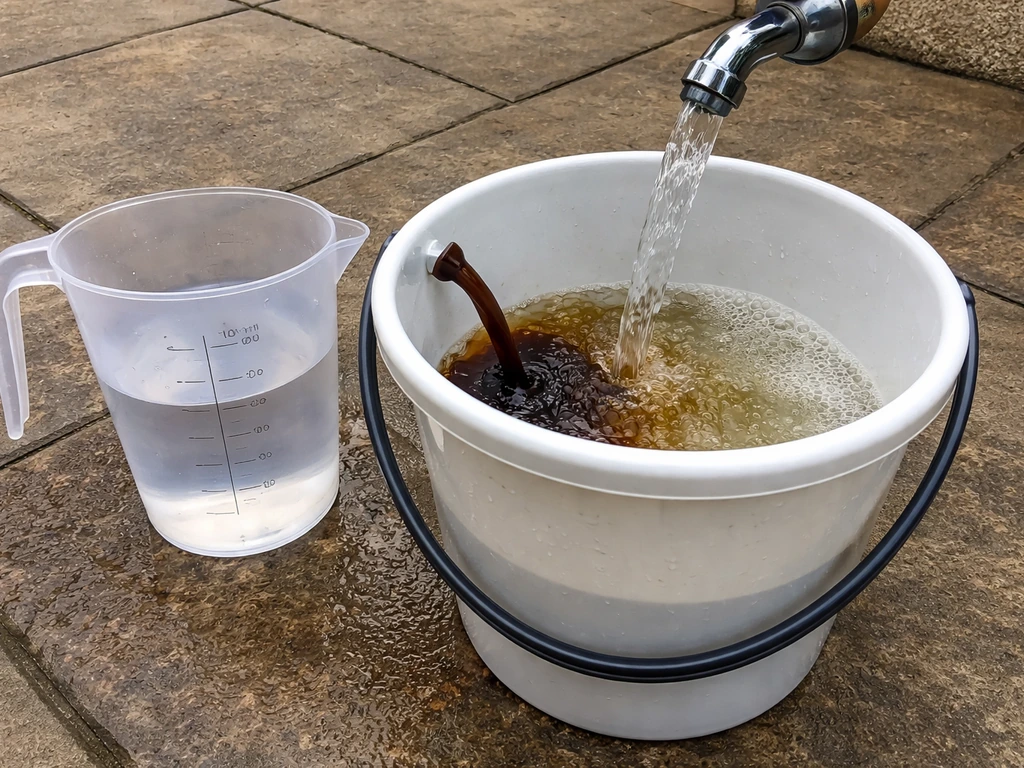
Standard dilution (most patios)
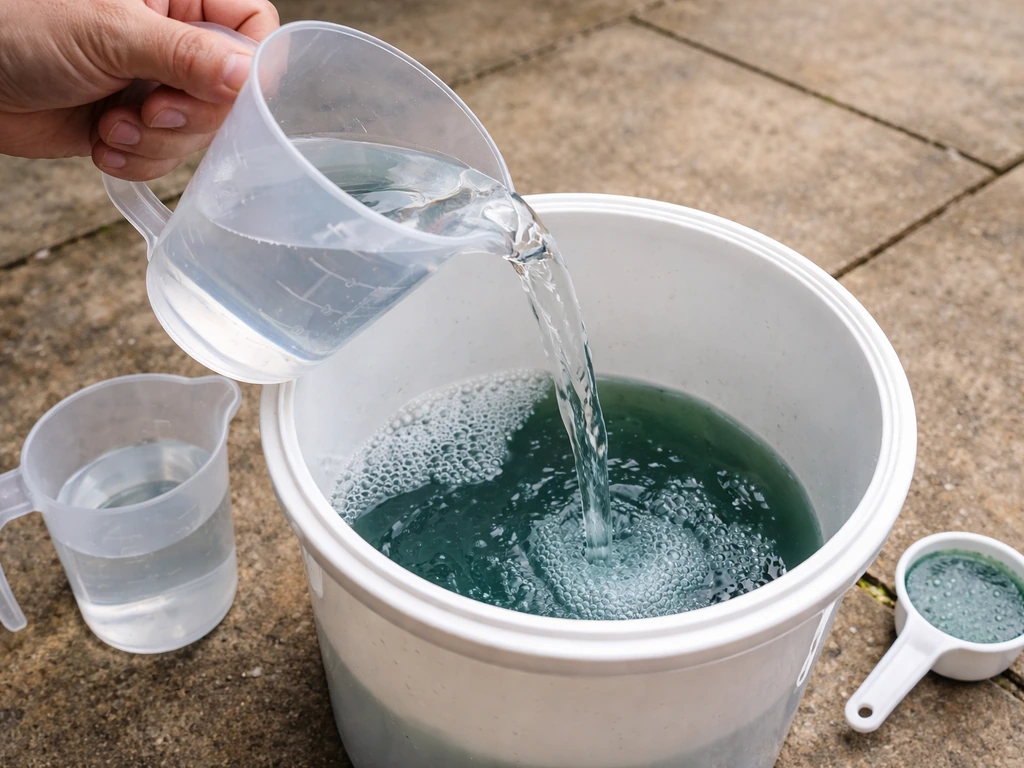
The standard ratio is 1 part Patio Magic! concentrate to 4 parts water. In practical terms: pour 500ml of concentrate into your bucket, then add 2,000ml (2 litres) of cold tap water. Stir gently for about 20 seconds. The mixed product should look like a slightly tinted or clear liquid, there's nothing to 'emulsify' or blend hard. If it looks the same going in as it does stirred, that's correct. You're not making paint; you're making a diluted biocide solution.
Heavier contamination or large areas
If your patio has very heavy algae, lichen, or black spot coverage, check your specific product label for whether it mentions a 1:9 dilution option. For heavy algae, lichen, or black spot coverage, the Patio Magic! Concentrate 2.5L label indicates a 1:9 dilution option may be appropriate blank" rel="noopener noreferrer">mentions a 1:9 dilution option. Some Patio Magic! concentrate versions reference this as a way to treat larger areas more economically while still being effective over time. At 1:9, you'd mix 250ml of concentrate with 2,250ml of water. The product still works, it just takes longer to show results on stubborn growth. If in doubt, the 1:4 standard mix is the safe default.
| Dilution Ratio | Concentrate Amount | Water Amount | Total Volume | Best For |
|---|---|---|---|---|
| 1:4 (standard) | 500ml | 2,000ml | 2.5L | Typical green algae, moss, general staining |
| 1:9 (light/large area) | 250ml | 2,250ml | 2.5L | Light contamination, very large surface areas |
| Ready-to-use spray | No mixing | No mixing | As purchased | Spot treatment, small patios, quick jobs |
Prep your patio surface before you apply anything
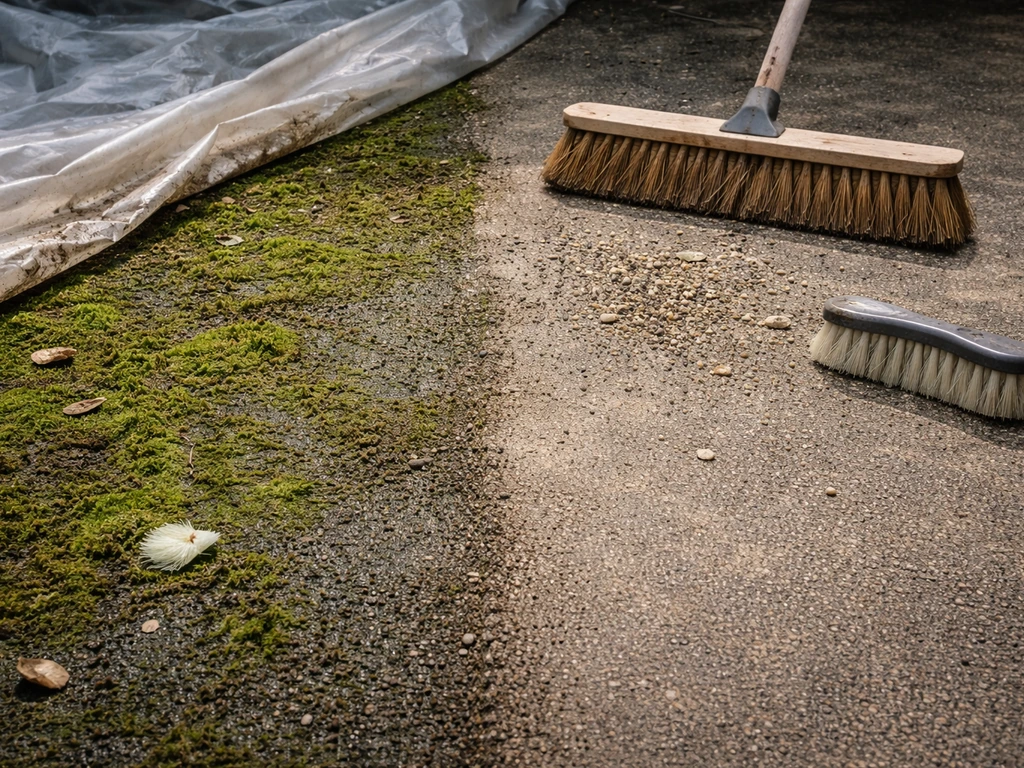
Patio Magic! is not a substitute for cleaning. It kills biological growth, algae, moss, lichen, green slime, but it works far better and more evenly on a surface that isn't clogged with loose debris. Spend 20 minutes brushing the patio down with a stiff broom before you mix anything. Remove leaves, dirt, and loose material from joints. If moss is thick and spongy, scrape off as much as you can physically before applying.
You don't have to pressure wash the patio first, but if it's heavily soiled, a rinse with a hose or a quick pressure wash makes the biocide work more efficiently. If you do pressure wash, let the surface dry for at least a few hours, ideally a full day if it's cool weather, before applying. The product needs to penetrate the surface, and standing water dilutes the mix further and reduces contact time.
Repair first, treat after
Before applying Patio Magic! , check for cracks, crumbling joints, sunken pavers, or failed mortar. Applying a biocide treatment over a structurally compromised patio isn't a waste exactly, but it's the wrong order of operations. Loose or missing mortar joints let water pool and actually encourage algae to come back faster.
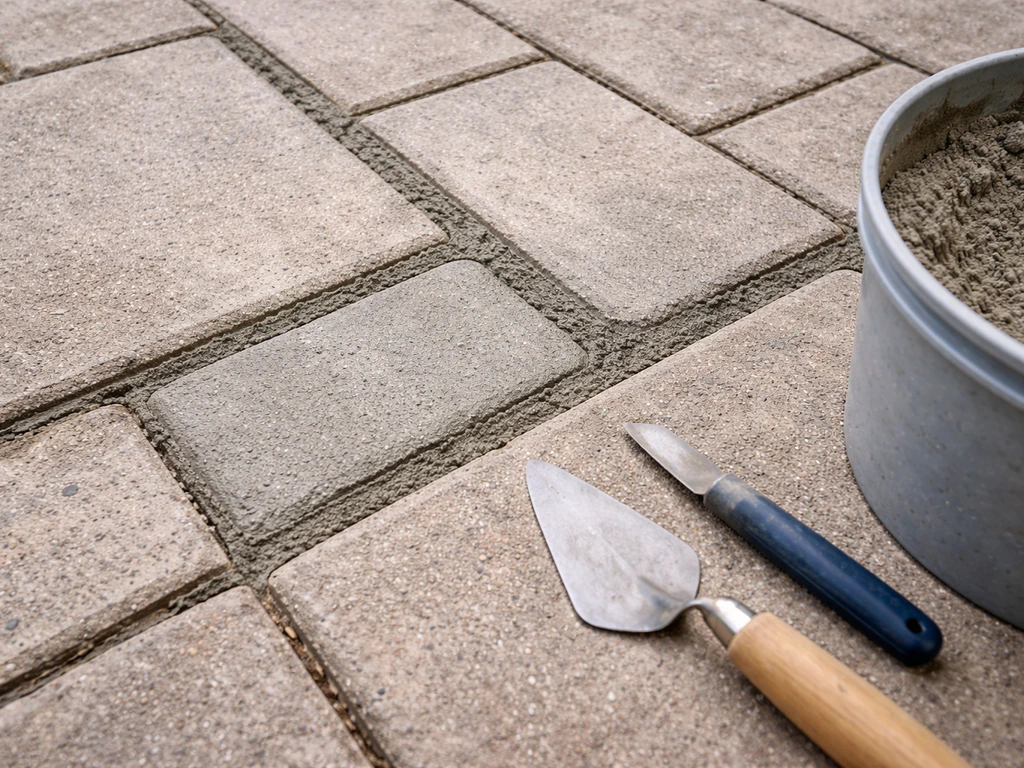
Weeds growing through joints signal that the jointing material has failed. If you've got significant joint failure, sorting that out first, whether that's repointing with sand and cement or using a proprietary jointing compound, means the Patio Magic! Repointing a patio with sand and cement is the physical repair step that helps stop water pooling and re-growth repointing with sand and cement.
If the jointing material has failed, you'll want to repoint the patio joints with sand and cement (or a suitable jointing compound) before you apply any biocide treatment repointing with sand and cement. If your patio joints have failed, that repointing step helps stop water and growth returning, so you can get longer-lasting results from your treatment repoint the patio joints with sand and cement. treatment lasts much longer. Cracked concrete slabs are a separate issue: small hairline cracks can be filled before you treat, but large cracking or spalling concrete suggests deeper problems that a surface biocide won't address.
If you're dealing with sunken pavers or drainage issues that cause water to pool on the surface, that pooling is a direct cause of the algae you're trying to treat. Patio Magic! will knock back the growth, but if water sits there for hours after rain, it will return quickly. That's a situation where the treatment buys you some time but doesn't fix the root cause.
How to apply the mixed product
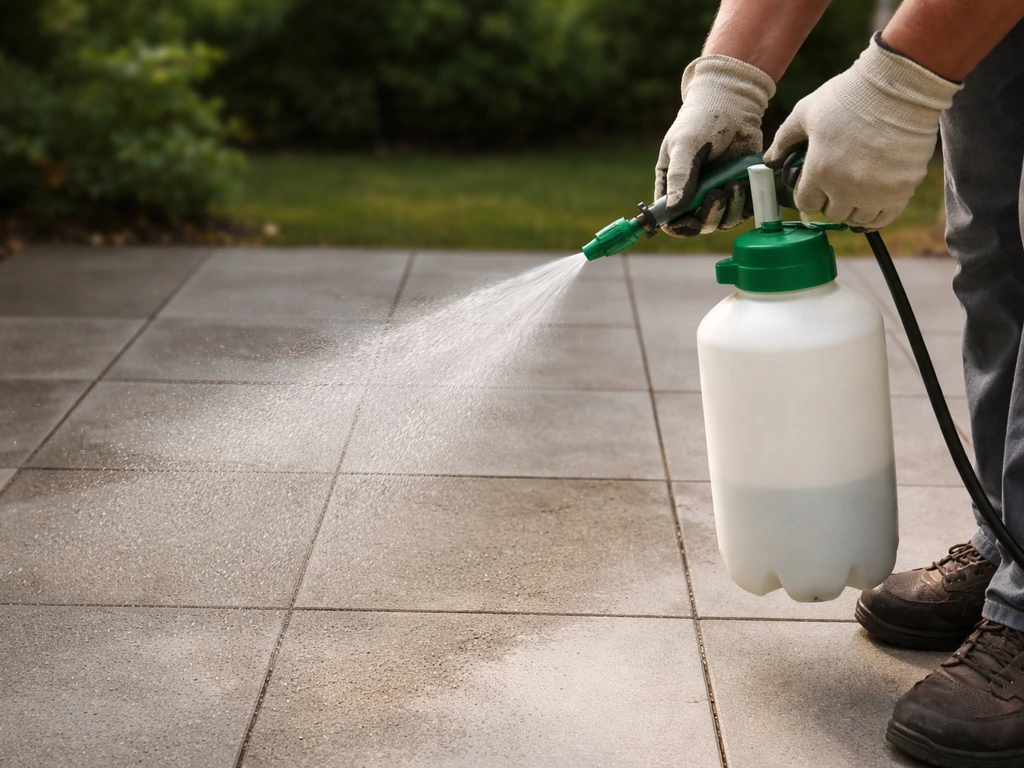
Pour your mixed solution into a garden pump sprayer or a watering can with a fine rose. A pump sprayer gives more even coverage and uses less product, it's the better tool for patios larger than about 10 square metres. Apply the solution evenly across the surface, working in sections so you don't miss areas. You want the surface visibly wet but not flooded, you're not trying to wash it, you're coating it so the biocide has contact time with the surface.
The critical instruction on the label is to let the spray dry. Don't rinse it off, don't scrub it after application. Patio Magic! is a leave-on treatment. The biocide needs to dry into the surface and then work over several days to weeks as it kills the algae and moss. The surface will look the same immediately after application, that's normal. Results appear as the organic growth dies off, typically within 1 to 4 weeks depending on weather, growth type, and how thick the contamination was.
Application tips
- Apply on a dry day when no rain is forecast for at least 4 to 6 hours — rain washing the product off before it dries is the single most common reason treatments fail
- Avoid applying in direct hot sun, which causes the product to dry too fast and can leave residue marks; overcast but dry is ideal
- Work in manageable sections so you can track even coverage
- Don't apply to frozen surfaces or when frost is expected overnight
- Keep children and pets off the treated surface until completely dry
When things go wrong: troubleshooting common problems

Streaks or uneven patches
Streaking usually means the product was applied unevenly, or part of the surface dried faster than another (often because one section was in direct sun). If you see obvious streaks after drying, you can apply a second, lighter coat over the affected area. Make sure you're working in sections and that coverage is consistent. A pump sprayer is much less likely to cause this than a watering can.
Nothing seems to be happening
If you don't see any change after two weeks, there are a few possibilities: it rained within a few hours of application and washed the product off before it dried; the dilution was too weak because an extra splash of water got in; or the growth is particularly thick lichen that takes longer to respond. Lichen (the crusty, flat, grey or orange growth) is the hardest to treat and can take 6 to 8 weeks to show visible dieback. Re-apply at full 1:4 strength and make sure conditions are dry.
White residue or whitish haze on the surface
A white powdery residue after treatment is usually one of two things: efflorescence (mineral salts being drawn to the surface by moisture, which is a property of the stone or concrete, not the product) or product residue from applying too heavily. Efflorescence is harmless and often weathers away on its own. If it doesn't, a dilute acid wash designed for stone or concrete can remove it. If the haze looks more like dried product marks, a gentle rinse with clean water once the treatment has had at least 24 hours to work is usually enough.
Surface looks darker or discoloured
Patio Magic! is not a stain or sealer, so it shouldn't permanently darken the surface. If the patio looks darker immediately after application, it's because the surface is still wet, it will return to its normal colour once dry. If there's a persistent colour change, check whether the product was meant for your specific surface type. On some pale natural stones, any biocide liquid can cause temporary or permanent tonal shifts. Always test on a hidden area first if you're unsure about your stone type.
Tackiness or sticky feeling after drying
If the surface feels sticky after it's had time to dry, the product was likely applied too thickly or in too cool/humid conditions that slowed drying. Rinse lightly with clean water and allow more time. In persistently damp or cold weather (below about 10°C), drying times extend significantly, don't re-apply or rinse too early.
Safety and ventilation when using Patio Magic!
Patio Magic! concentrate is a biocide, which means it's designed to kill living organisms, algae, moss, lichen. That comes with some basic safety requirements. Always wear rubber gloves and eye protection when mixing and applying. Avoid splashing the product on skin or in eyes, and if contact occurs, rinse with plenty of clean water. Work outdoors, this isn't a product you'd use inside, and the fumes are minimal in open air, but don't lean over the bucket or sprayer and breathe the concentrate directly.
- Keep the product away from drains, ponds, water features, and any standing water — it's harmful to aquatic organisms
- Cover or temporarily move garden plants that sit right at the patio edge; overspray on foliage can cause damage
- Store concentrate in the original sealed bottle, away from children and pets, in a cool frost-free location
- Dispose of any unused mixed solution responsibly — don't pour large amounts down drains or into garden soil
- Wash hands thoroughly after use even if you wore gloves
When to call a professional instead
Patio Magic! handles biological surface growth well, and mixing and applying it yourself is genuinely straightforward. But it's a surface treatment, not a structural fix. If the reason your patio keeps growing algae and moss is because water is pooling due to poor drainage, sunken pavers, or a patio that's settled out of level, a biocide is a short-term fix at best. You'd be retreating every season rather than solving the problem. Similarly, if you have significant concrete cracking, spalling, crumbling mortar joints across a large area, or pavers that have moved substantially, those need physical repair before or instead of a treatment product.
For large patios with serious structural movement, drainage problems that redirect water toward the house, or concrete failure that goes beyond surface cosmetics, a professional assessment is the right call. The mixing and treating side of Patio Magic! is well within DIY territory, it's the underlying problems that sometimes aren't.
FAQ
Can I mix Patio Magic concentrate in a bigger batch than I need, and how long will it last after mixing?
You should only mix what you can apply the same day. Even if the bottle does not specify an exact shelf life for the diluted solution, treating outdoors in sections is best because leftover mix can lose effectiveness and can be harder to keep at a consistent strength.
What water should I use, tap water or distilled, and should it be warm or cold?
Use cold tap water. The article’s mixing method assumes cold water, and using hot or very warm water can change how the biocide behaves during application (and can encourage uneven drying).
Do I need to rinse the patio after Patio Magic has dried and the algae is gone?
Usually no. Patio Magic is meant to be a leave-on biocide treatment, so you do not rinse off or scrub after application. If you want to remove dead growth, wait until the growth visibly dies back and then do light brushing, not washing the product off immediately.
Will Patio Magic harm grass, plants, or shrubs near the patio?
It can, especially if it runs into planting areas or pooling spots. To reduce risk, avoid overspraying, keep the surface wet but not flooded, and cover nearby plants or shift sprayer work away from planting edges so any runoff stays minimal.
Can I apply Patio Magic right after mowing the lawn or trimming plants near the patio?
Yes, but make sure the patio surface is brushed free of loose debris first, and avoid spraying so heavily that it drips onto freshly cut vegetation. If rain or sprinkler irrigation is likely soon after application, postpone until conditions are dry long enough for the treatment to dry in.
Should I apply Patio Magic on a sunny day, or does direct heat cause problems?
Direct sun can speed drying unevenly, which is a common reason for streaks. Work in smaller sections and try to apply when the surface is not baking, so you get a consistent wet coating long enough to dry evenly.
What if I accidentally used the wrong dilution, too strong or too weak?
If you over-concentrated, results are not guaranteed to be better, and you are more likely to get residue or persistent haze, especially on stone. If you under-diluted or added extra water, you may need a second application at full 1:4 strength once the area has dried and you confirm it is not still wet from application or rain.
Can I spot-treat only the worst algae patches instead of mixing for the whole patio?
You can spot-treat, but maintain the same ratio and ensure full surface coverage where you apply. Small areas dry faster and can create visible boundaries, so keep application consistent and consider a lighter second coat on any patch that dried too fast or shows streaking.
Why does it look like nothing happened after a week, even though I followed the steps?
For thick lichen and some stubborn growth, dieback can take much longer. Also, if the surface stayed wetter than expected (cool damp conditions or rain soon after), the contact time reduces. Wait longer for lichen, and if no change appears after two weeks, re-check conditions and re-apply at full strength only when the surface is dry.
What should I do if efflorescence or a white haze appears after treatment?
First determine whether it is mineral salts (harmless efflorescence) or heavier product residue. If it is just efflorescence, it often weathers away, but if it persists as residue marks, a gentle clean-water rinse after at least 24 hours can help.
Is Patio Magic safe to use on all patio materials, like natural stone, brick, or painted concrete?
Not automatically. The article warns that tonal shifts can happen on some pale natural stones, so always test on a hidden area first. If your patio has sensitive coatings like painted concrete or certain decorative finishes, check the product label for compatibility before treating.
Can I use Patio Magic on cracked concrete or failing joints, or should I repair first?
Repair first if there is significant joint failure or water pooling, because treating over loose or crumbling mortar can let algae return faster. For small hairline cracks you may be able to fill before treatment, but larger spalling or major concrete failure needs a physical fix or professional assessment.
How do I prevent streaks if I keep seeing darker lines or uneven patches?
Use a pump sprayer for more even coverage, apply in sections so you do not let one area dry completely before finishing the next, and avoid applying when the patio is very hot from sun. If streaks appear after drying, a second lighter coat over the affected areas is usually the best next step.
Next Article
How to Repoint a Patio With Sand and Cement Step by Step
Learn how to repoint a patio with sand and cement, from diagnosing joint failure to mixing, packing, and curing for dura